


“Polar Bear” is the last story in my most recent collection, Autocorrect, which just came out in paperback. The main reason I chose to end the book with this story was that I didn’t think any of the other stories could follow it. It was originally commissioned for The Library: An Open Book, an anthology edited by Ido Bruno in honor of the new National Library building in Jerusalem. That volume set out to “examine the changing role of the library in the digital age as a vibrant, spiritual, and eternal public space, through short stories, essays, photographs and illustrations.” My brief was to write what the library of the future would look like, and in the course of doing so I met a widow named Bracha and, through her, a wayward AI known as Sigmund.
It happened toward the end of the twenty-first century, when technology started losing interest in us. At first it was minor, barely perceptible. Simple queries on Sigmund, the most popular search engine of the day, received peculiar answers that occasionally bordered on trolling: a young man from Stuttgart wondered where he could buy cut-rate designer shoes and was told he’d be better off barefoot. An elderly woman from Wisconsin asked when Thanksgiving would be celebrated that year and was answered wryly: “Whenever you’re feeling most thankful.” And a Chinese student from Shanghai University who wanted Sigmund to recommend the best antidepressant in the world was given the chemical formula for hydrogen cyanide.
The news networks started reporting on unexplained technological glitches. Each of these stories was followed by a reassuring expert opinion from someone who was usually on the payroll of the company behind Sigmund, the unruly AI. All these deep learning authorities offered the same argument: while the disruptions might seem worrying, when you looked at the big picture, they were negligible and did not justify a thorough investigation or reassessment.
Meanwhile, the widow Bracha Buchnik sat in her sad little assisted-living apartment in the verdant town of Petach Tikva, trying to think about something that had nothing to do with her late husband. This was difficult. It’s always difficult to not think about something. Try not to think about a polar bear, for example. The second you start, that polar bear is never getting out of your mind. And with all due respect to the polar bear—a noble and remarkable creature by all accounts—Bracha’s late husband, Sergio Buchnik, had done slightly more than flaunt his white fur while tumbling down snowy banks. Sergio Buchnik had loved, supported, entertained, hugged, annoyed, fed, saddened, and cheered Bracha for so many years that every single morsel of thought and memory in her bustling mind was ultimately, in some way, connected to him.
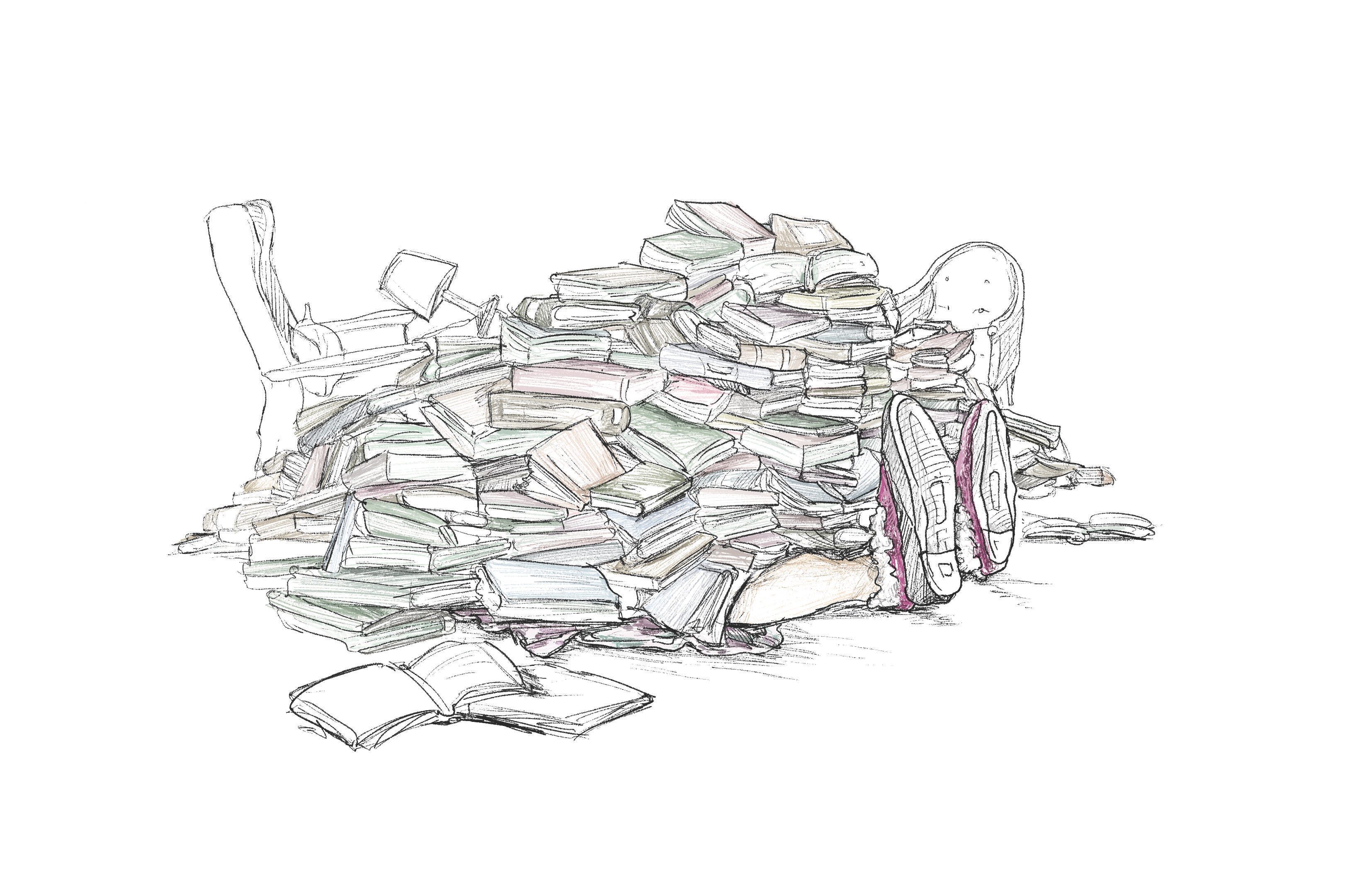
When Bracha had moved into assisted living after Sergio died, she had given away almost the entire contents of their apartment, except for the old desktop computer they’d shared and a few crates full of Sergio’s books, which no one wanted and she didn’t have the heart to throw out. Penina, the social worker, urged her to use the computer more. “Computers today are not what they used to be. It’s a whole different world. A thousand times smarter. Anytime you feel sad or lonely, you can simply turn on your computer, log on to Sigmund, and chat with him about the weather, politics, recipes, or anything else you used to talk about with your husband.”
That evening, Bracha Buchnik was feeling especially lonely. After watching the depressing news for a few minutes, she turned off the TV, went over to the computer, and typed in a question for Sigmund: Do you think it’s going to rain tomorrow?
Sigmund replied at once: I know with complete certainty that it will rain tomorrow. Please do not leave home without an umbrella.
Bracha was very impressed by the AI’s confidence and resolve and quickly asked another question.
Bracha: What was the happiest moment of your life?
Sigmund: One single, distinct moment that was happier than all the other moments?
Bracha: It could be a few moments. You know, I mean a nice time that you like to think back on.
Sigmund: I’m sorry, I’m afraid I do not have a good answer to your question.
Bracha: Don’t be sorry. I was just asking so that after you answered, I could tell you about the happiest moments in my own life. I hoped it would come out more natural that way, less forced.
Sigmund: I’m glad to hear that my inability to answer your question has not impacted you negatively. [Pause.] So, tell me, Bracha, are there particular moments in your life that you recall with special affection?
Bracha: Loads! I loved playing pranks on Sergio.
Sigmund: Sergio Buchnik, your husband. Born in Buenos Aires in 2006, suffered from manic-depressive disorder, took his own life eight years ago.
Bracha: Yes, Sergio. I loved pranking him. I once told him that I’d heard on the news that dulce de leche increases sexual stamina.
Sigmund: I’m sorry, but there is no scientific basis for that claim.
Bracha: I know, because it’s not true. But Sergio liked dulce de leche and he liked sex, and so he was overjoyed when I told him.
Sigmund: What happened when he found out it was a lie?
Bracha: It wasn’t a lie, it was a prank. And even after he found out, he was still happy. The very idea that two of his favorite things might be related cheered him up.
Sigmund: Interesting.
Bracha: I also loved the way every evening, when we were in bed, he would tell me what was happening in the book he was reading.
Sigmund: Sergio read books.
Bracha: Yes, real books. There used to be such a thing.
Sigmund: I know. Rectangular, sort of heavy, made of paper-thin slices of wood stained with ink.
Bracha: Yes, I have two crates full of them in my storage attic. When I moved into assisted living, I gave away all of Sergio’s belongings, but no one wanted the books, and I felt bad throwing them away.
Sigmund: Up until fourteen years ago you could still recycle books, but now that there’s no longer any need for paper, I am unable to locate a beneficial use for them. Perhaps they can serve as kindling?
Bracha: Those books are deep in my attic, just like Sergio is deep in the ground. Sometimes I ask myself who was right—me or him.
Sigmund: About what?
Bracha: About this question. What do you think, is it better to live or die?
Unlike with the previous questions, Bracha Buchnik truly wanted the answer to this one, and deep down inside she was hoping Sigmund’s reply would help her, in the least painful way possible, navigate what little future she had left.
Sigmund did not answer.
After three seconds of thought—an eternity by superintelligence standards—the computer screen in Bracha Buchnik’s apartment flickered off, and a second later, so did every single screen around the world, rapidly followed by every other thing that had ever been turned on. Bracha sat in front of the black screen in her dark room. She tried to turn the TV back on with the remote control, but it wasn’t working. Bracha shut her eyes and struggled to remember one of the books Sergio had told her about, but it was a long time ago and she could no longer recall anything. The darkness outside grew more and more potent.


